Artificial intelligence has changed the way businesses create digital content. From blog articles and website copy to SEO metadata, social media posts and product descriptions, AI can help marketing teams create content faster and at scale.
But there is one important step businesses should not skip: human review and fact-checking.
Google has recently updated its guidance around generative AI content, emphasizing that AI-generated content can contain inaccuracies or “hallucinations.” Google now states that it is critical to manually fact-check and review AI-generated content for accuracy and trustworthiness before publishing.
For marketers, this sends an important message:
AI should accelerate content creation—not replace human judgment.
Is Google Against AI-Generated Content?
No. Google is not saying that businesses should stop using AI to create content. Generative AI can be useful for research, brainstorming, outlining, editing and many other content-related tasks.
The concern is with publishing AI-generated content without proper quality control.
Google’s broader guidance continues to emphasize helpful, reliable and people-first content. Content should provide value to users rather than being created primarily to manipulate search rankings.
So instead of asking:
“Can AI write this article?”
marketers should ask:
“How can we use AI to create better content while maintaining accuracy, expertise and trust?”
Why Fact-Checking AI Content Matters
AI-generated content can sometimes produce information that sounds convincing but is incorrect.
For example, AI could potentially:
- Provide an incorrect statistic or date
- Misinterpret a technical concept
- Invent or incorrectly reference a source
- Publish an outdated claim
- Describe a product capability incorrectly
- Make inaccurate comparisons
- Generate incorrect SEO metadata
For B2B, technology and semiconductor companies, even a small factual error can damage credibility.
A technically knowledgeable customer may quickly identify an incorrect specification or misleading statement.
That means AI content quality is not only an SEO issue. It is also a brand trust issue.
Don’t Review Only the Article
One of the important points in Google’s updated guidance is that the review process should not stop with the main article.
AI can also generate:
- Page titles
- Meta descriptions
- Structured data
- Image alt text
- Other website content
These elements can influence how search engines understand and display a page, so they also need to be reviewed for accuracy.
For example, an article may be factually correct, but an AI-generated meta description could make an inaccurate claim about the company’s product or service.
A good AI content workflow therefore needs to review the entire page, not just the body copy.
The Right Approach: Human + AI
AI can make content production significantly faster, but human expertise remains essential.
A practical workflow could look like this:
1. Start With a Human Strategy
Define the audience, business objective, topic and search intent before asking AI to create content.
2. Use AI for Research and Ideation
AI can help identify topics, questions, content gaps, related concepts and potential content structures.
But treat AI-generated information as a starting point, not automatically verified information.
3. Add Human Expertise
This is where businesses can create content that stands out.
Subject-matter experts can contribute:
- Industry experience
- Original insights
- Customer examples
- Technical knowledge
- Data and research
- Opinions and analysis
This makes content more useful and harder to replicate with generic AI generation.
4. Use AI for Content Production
AI can then assist with drafting, editing, summarization, SEO optimization, FAQs, social media content and other repetitive tasks.
5. Fact-Check Before Publishing
Before publishing, verify important:
Facts → Statistics → Claims → Names → Dates → Sources → Links → Metadata → Structured Data → Alt Text
The final publishing decision should remain with a human.
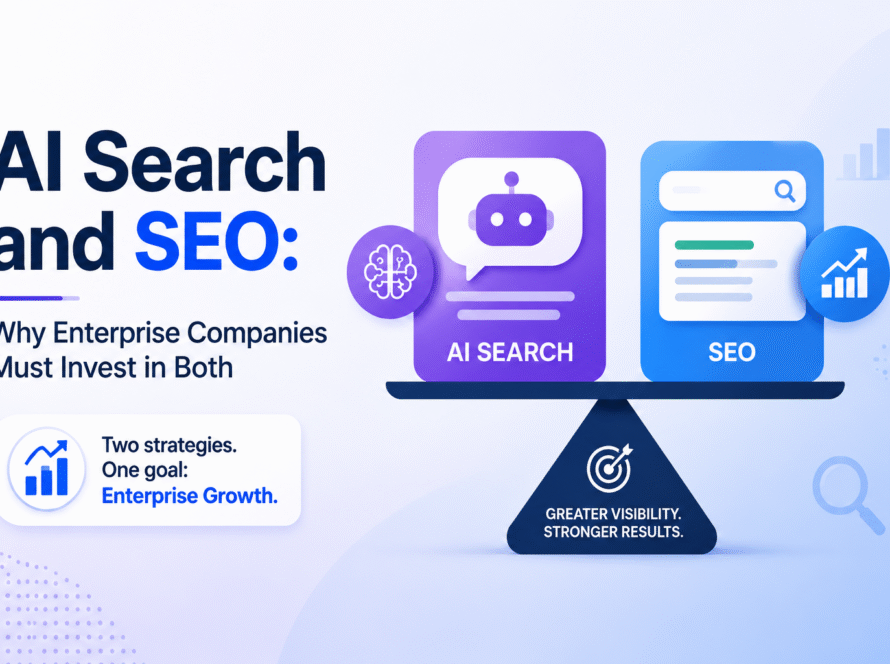
AI Search Makes Quality Even More Important
The importance of high-quality content is becoming even greater as search evolves toward AI-powered experiences.
Google’s guidance on optimizing for generative AI features emphasizes creating unique, valuable content and providing a distinctive point of view rather than simply producing generic information that already exists elsewhere.
This means businesses should not focus only on creating content that is easy for AI to generate.
They should create content that provides something AI alone cannot easily replicate:
Experience. Expertise. Original insights. Evidence.
A Simple AI Content Checklist
Before publishing AI-assisted content, ask:
Accuracy
- Have important claims been verified?
- Are statistics and dates correct?
- Are product specifications accurate?
Originality
- Does the content offer original insights or analysis?
- Does it provide more value than competing pages?
Expertise
- Has a subject-matter expert reviewed it where necessary?
- Does it demonstrate genuine industry knowledge?
SEO
- Is the title accurate?
- Is the meta description correct?
- Are structured data and alt text accurate?
- Are links relevant and working?
Trust
- Would a knowledgeable customer trust this content?
- Are important claims supported by credible sources?
- Are we comfortable putting our company’s name behind every statement?
The Future Is AI-Assisted, Not AI-Only
The debate around AI content is often presented as AI versus humans.
A better approach is:
AI for speed.
Humans for judgment.
Experts for authority.
Data for evidence.
Editors for quality.
AI gives businesses the ability to create and optimize content faster. But without proper review, it can also help businesses scale inaccurate information just as quickly.
Google’s latest guidance reinforces a principle that every responsible content strategy should follow:
Use AI to accelerate content creation, but make human fact-checking and editorial review a mandatory part of the publishing process.
The goal is not simply to publish more content.
The goal is to publish content that people can trust.